
A todo el que este en contra de la legislación para controlar los four tracks los invito a que se den una vueltecita por Centro Médico los sábados y domingos luego de las 3 pm. Luego me dicen…
Mes: noviembre 2013
Tito Cordero| Talento Juvenil en el Área Norte
 Tito Cordero
Durante este fin de semana y lunes los ojos de todo Puerto Rico estuvieron atentos a las ejecutorias de dos jóvenes talentosos y ejemplares para todo Puerto Rico.
Me refiero a el boxeador Vegabajeño Román (Rocky) Martínez y a la joven Marileyda Hernández ganadora de del tercer concurso Idol Puerto Rico. Es justo reconocer a estos embajadores del área norte, Rocky en los deportes y Marileyda en el arte de la música ya que ponen de manifiesto que la juventud hace la diferencia y hay gran esperanza en ella.
Vaya mi felicitación y admiración a las familias de estos dos jóvenes que sin lugar a dudas han dado el máximo en calidad y cantidad de tiempo para hacer de ellos nuestro orgullo.
Veteranos Vegabajeños| José (Pepito) Meléndez Narváez
El Lente de Luigi| La Celebración del Día del Veterano en Tortuguero

Gumby Navedo| Gracias a los patriotas
Mi mas sentido saludo y respeto para todos esos hombres y mujeres que han ofrendado y derramado su sangre en los campos de batallas sirviendo en haras de la libertad.
Al regimiento 65 de Infantería de Puerto Rico, que participó valientemente en el conflicto en Korea y dió catedra de lo que es tener valor y compromiso. A los que murieron en la Primera Guerra Mundial, a los que murieron en la Segunda Guerra Mundial, A los que participaron en Vietnam, los del Golfo Persico, los de Irak, los que han caido en Afghanistan, a los que nunca regresaron a sus hogares, a los que nunca pudieron darle un abrazo de vueltas a sus padres, familiares y amistades.
Aquellos que salieron y nunca llegaron, esos que siempre seran recordados mas nunca olvidados, por su sacrificio, honor y valentia…para ellos nuestro mas inmenso agradecimiento, gracias por su sacrificio…..y que no haya mas guerra, tenemos que vivir sin egoismo y buena voluntad.
Dios bendiga a América.
Herminio Marrrero| Campamento Tortuguero en 1951
 Herminio Marrero
Saludos en Celebración de Día Del Veterano . En Campamento Militar Tortuguero en Vega Baja más de cuatrocientos reclutas después de catorce semanas de un intenso adiestramiento se graduaron del curso básico en el año 1951 . Durante ese tiempo se desarrollaba una luchada guerra en Korea . El Campamento Tortuguero jugó un papel importante en la formación del carácter militar de borincanos prestos al llamado del ejercito de los Estados Unidos .

Algunos Veteranos Vegabajeños
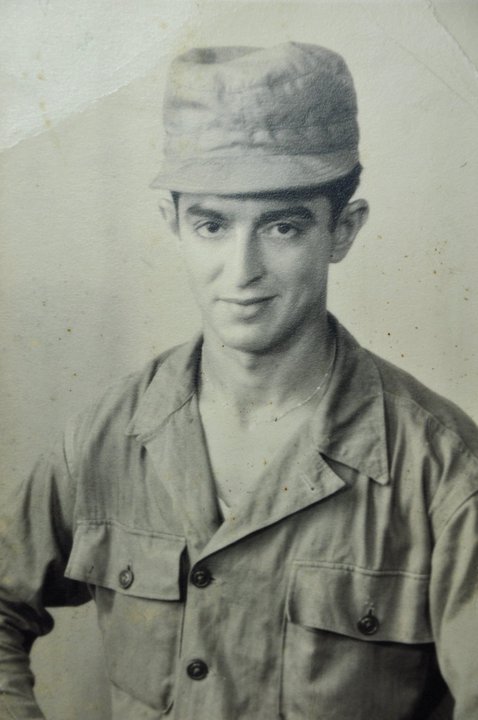
Acceda a Pedro Juan Colón Santiago (Guango ) Vicente (Chente) Santos Portalatín, otros dos veteranos vegabajeños por Floydán de León
Jorge Otero Barreto
From Wikipedia, the free encyclopedia
| Jorge Otero Barreto | |
|---|---|

Sergeant First Class Jorge Otero Barreto
|
|
| Nickname | The Puerto Rican Rambo |
| Born | 7 April 1937 [1][2] Vega Baja, Puerto Rico |
| Allegiance |  United States of America United States of America |
| Service/branch |  United States Army United States Army |
| Years of service | 1959-1970 |
| Rank |  Sergeant First Class Sergeant First Class |
| Unit |  101st Airborne Division 101st Airborne Division 25th Infantry Division, 25th Infantry Division,Tropic Lightning (Special Designation)[3]  82nd Airborne Division 82nd Airborne Division 173rd Airborne Brigade Combat Team 173rd Airborne Brigade Combat Team |
| Battles/wars | Vietnam War |
| Awards |  Silver Star (3) Silver Star (3) Bronze Star (5) Bronze Star (5) Army Commendation Medal (4) Army Commendation Medal (4) Purple Heart (5) Purple Heart (5) Air Medal (5) Air Medal (5) |
Sergeant First Class Jorge A. Otero Barreto[note 1] (Ret.), a.k.a. «the Puerto Rican Rambo«[4] (born 7 April 1937), earned 38 military decorations and has been called the most decorated U.S. soldier of the Vietnam War.[4][5][6] Due to his multiple awards he has received recognition from numerous organizations and has had buildings named after him. He is also the main subject of Brave Lords, a documentary which tells the story of the Puerto Rican experience in the war in Vietnam.
Contents
Early years
Otero Barreto was born in the town of Vega Baja, Puerto Rico, the son of Eloy Otero-Bruno and Crispina Barreto-Torres.[1][2] His father named him «Jorge», Spanish for George, after George Washington whom Otero-Bruno admired.[7] In Vega Baja, Otero Barreto received his primary and secondary education. He attended college for three years, studying biology until 1959 when he joined the U.S. Army. After his basic training, he attended the Army’s Air Assault School, graduating in 1960.[8] He was the first Puerto Rican to graduate from the U.S. Army Air Assault School.[7]
Vietnam War
From 1961 to 1970, Otero Barreto served five tours in Southeast Asia, starting as an advisor who helped train Vietnamese troops.[9][10] According to the documentary «Brave Lords», Otero Barreto served in various military units during his military career. He served in the 101st Airborne Division and the 25th Infantry Division «Tropic Lightning». He also served in the 82nd Airborne Division, an active airborne infantry division of the United States Army specializing in parachute landing operations and in the 173rd Airborne Brigade Combat Team.[11] He participated in 200 combat missions,[4] was wounded five times in combat,[7] and was awarded 38 military decorations,[12] making him «the most decorated soldier of the Vietnam War.»[4][5] Among his many decorations are 3 Silver Stars, 5 Bronze Stars with Valor, 4 Army Commendation Medals, 5 Purple Hearts and 5 Air Medals (one each for every 5th mission which involved a helicopter).[5][13]
Otero Barreto has been called «the most decorated Puerto Rican veteran,»[6] and the news media[4] and various organizations[14] have called him «the most decorated soldier in the Vietnam War.»[4] Whatever the case, Otero Barreto remains one of the most decorated Vietnam War veterans, and possibly the most decorated U.S. soldier in the Vietnam War living today.[15][16]
Recognitions
On 22 June 2012, Otero Barreto was the keynote speaker at a Vietnam Veterans Memorial Dinner in Lorain, Ohio.[17] On 1 September 2006, the Coalición Nacional Puertorriqueña (National Puerto Rican Coalition) honored Otero Barreto with a «Lifetime Achievement Award» in a Conference held at the Hotel Hilton of Chicago. The keynote speaker was U.S. Congressman Luis Gutierrez.[18][19]
A transitional home for veterans in Springfield, Massachusetts, the SFC Jorge Otero-Barreto Homeless Veterans Transitional Home, was also named after Otero Barreto.[20] The home is managed by the Vietnam Veterans of America Chapter #866 in Springfield, Massachusetts. The home is part of a program named named the «Jorge Otero Barreto Homeless Veterans Transitional Program» which houses twelve (12) veterans. The program offers counseling, DVA services from the Western Massachusetts Bilingual Veterans Outreach Center, assistance in obtaining Chapter 115 financial assistance, AA/NA meetings, and Christian Rehabilitation Substance Abuse meetings.[6][21]
The town of Vega Baja dedicated its military museum to Otero Barreto and named it the «Jorge Otero Barreto Museum.»[22] On 2 October 2011, Otero Barreto was named Vegabajeño del Año en Civismo (Civic Citizen of Year of Vega Baja).[23] Otero Barreto was featured in the documentary film Brave Lords, a perspective on the war in Vietnam, as experienced by Puerto Rican soldiers.[24]
Military decorations
Among SFC Otero Barreto’s military decorations:[11]
 Silver Star with two oak leaf clusters
 Bronze Star with four oak leaf clusters
 Army Commendation Medal with three oak leaf clusters
 Purple Heart with four oak leaf clusters
 Air Medal with four oak leaf clusters
 National Defense Service Medal
 Vietnam Campaign Medal
 Vietnam Service Medal with four award stars


Badges

Tabs:
 101st Airborne Division Patch
 25th Infantry Division Patch
 82nd Airborne Division Patch
 173th Airborne Brigade Shoulder Patch
See also

- List of famous Puerto Ricans
- List of Puerto Rican military personnel
- Puerto Ricans in the Vietnam War
Notes
- Jump up ^
This name uses Spanish naming customs; the first or paternal family name is Otero and the second or maternal family name is Barreto.
References
- ^ Jump up to: a b U.S. Department of Commerce. Office of the Census. 1940 United States Census Records. «Censo Décimosexto de los Estados Unidos: 1940 – Población: Puerto Rico. (Sixteenth Census of the United States: 1940 – Population Schedule: Puerto Rico).» Municipality: Vega Baja. Barrio: Pueblo. Township: Aldea Sánchez López. Census Taker: Isabel Oliveras de Pérez. Date: 5 April 1940. Sheet: 6-B. Rows 71, 72, and 75. The National Archives and Records Administration, 700 Pennsylvania Avenue NorthWest, Washington, District of Columbia, United States of America. Retrieved 27 August 2012.
- ^ Jump up to: a b Jorge A. Otero-Barreto (b. April 07, 1937). Ancestry.com. 2009. Retrieved 26 August 2012.
- Jump up ^ «Special Unit Designations». United States Army Center of Military History. 21 April 2010. Archived from the original on 9 June 2010. Retrieved 5 September 2012.
- ^ Jump up to: a b c d e f War veterans recognized at Fort Buchanan. Rafael R. Díaz Torres. Puerto Rico Daily Sun. 12 November 2011. Retrieved 26 August 2012.
- ^ Jump up to: a b c Remarks of Major General Orlando Llenza, USAF (Ret.), Delivered to the Puerto Rico Bar Association of Florida, 6th Annual Gala, Fort Lauderdale, Florida. Major General Orlando Llenza. 25 October 2008. Retrieved 26 August 2012.
- ^ Jump up to: a b c Membership Notes. December 2000/January 2001. Vietnam Veterans of America. Retrieved 26 August 2012.
- ^ Jump up to: a b c Sargento Jorge Otero Barreto. Hispanidad: Nuestros Heroes. Univision Online. 2008. Retrieved 3 September 2012.
- Jump up ^ Sargento Jorge Otero Barreto: Es el soldado boricua más condecorado. Hispanidad: Nuestros Paises. Univision. Retrieved 26 August 2012.
- Jump up ^ Most Decorated US Soldier in Vietnam War. Profiles in Courage. Latino Alliance. 2012. Retrieved 26 August 2012.
- Jump up ^ Puerto Rican veteran shares tales of Vietnam. The Morning Journal.
- ^ Jump up to: a b Documentary decoration gallery. Joe Felix. Brave Lords, The Documentary Film: A perspective of the war in Vietnam as experienced by Puerto Rican soldiers. Brave Lords Productions. New York, New York. 2012. Retrieved 5 September 2012.
- Jump up ^ Acceptance In U.S. Role A Long March For Veterans. Mike Swift. Hartford Courant. 28 March 1996. Retrieved 26 August 2012.
- Jump up ^ Most Decorated US Soldier in Vietnam War. Latino Alliance. Latino Alliance Profiles in Courage! 2012. Retrieved 26 August 2012.
- Jump up ^ Most Decorated US Soldier in Vietnam War. Latino Alliance. 2012. Retrieved 26 August 2012
- Jump up ^ Hometown hero is Spirit honoree: Capt. Joe Hooper most-decorated Vietnam War vet. Huntsville Times. 4 July 2008. Retrieved 26 August 2012.
- Jump up ^ Medal of Honor recipient Col. Robert L. Howard dies at 70. T. Rees Shapiro. Washington Post. 23 January 2010. Retrieved 26 August 2012.
- Jump up ^ Vietnam Veterans Memorial Dinner. Lorain County Vietnam War Fallen Heroes Recogintion Dinner. Calendar. City of Lorain, Ohio. Retrieved 26 August 2012.
- Jump up ^ Realizan encuentro boricua en Chicago. El Diario-La Prensa. New York, NY 09/01/2006.
- Jump up ^ NPRC Reception, Dinner and Dance: “Un Encuentro Entre Familia”. Fiesta Boricua. La Voz del Paseo Boricua. July–August 2006. Vol 3. Number 4. Page 11. Retrieved 3 September 2012.
- Jump up ^ Outreach/Vet Centers & Transition Houses. The Bay State Veteran. August 2012 Newsletter. Page 4. The Blinded Veterans Association (BVA). Retrieved 26 August 2012.
- Jump up ^ Jorge Otero Barreto Homeless Veterans Transitional Home. Bilingual Veterans Outreach Centers of Massachusetts, Inc. Springfield, Mass. Retrieved 26 August 2012.
- Jump up ^ Municipalities / Vega Baja: Places of Interest. Puerto Rico Encyclopedia. Retrieved 26 August 2012.
- Jump up ^ Vegabajeño del Año en Civismo. Diario Vegabajeño. Vega Baja News, Inc. 11 October 2009. Retrieved 26 August 2012.
- Jump up ^ Brave Lords: The Documentary Film: A perspective of the war in Vietnam, as experienced by Puerto Rican soldiers. Joe Felix. Brave Lords Productions. New York, New York. 2012. Retrieved 27 August 2012.
La antigua pista aérea militar de Tortuguero
(Reproducido de http://www.airfields-freeman.com/PR/Airfields_PR_W.html)
Vega Baja Auxiliary Airdrome, Vega Baja, PR
18.48 North / 66.43 West (West of San Juan, PR)

Vega Baja Airfield, as depicted on the May 1964 USAF Operational Navigation Chart (courtesy of Chris Kennedy). Photo of the airfield while open has not been located.A total of 554 acres was acquired by the Federal Government in 1941 to develop the Vega Baja Auxiliary Airdrome. The Army constructed a runway, taxiway, roads, utilities, and several buildings. The field was used as an auxiliary airfield to Ramey Airfield, and was used for training by units with P-36, P-39 & P-40 fighters, among others.
It was an active installation from 1941-1956, when its functions were no longer required. Between 1956-1975, the Puerto Rican National Guard utilized the property for training purposes.
A single runway at Vega Baja was still depicted on the May 1964 USAF Operational Navigation Chart (courtesy of Chris Kennedy), but it was labeled as «Abandoned».In 1976, the property was conveyed to the Commonwealth of Puerto Rico.

The 1977 USGS topo map depicted Vega Baja as having a single southwest/northwest runway, with multiple taxiways on the southeast side. Ricardo Medina reported in 2005, “Twenty five years ago the strip was used by apprentice drivers to practice for their license driving test (I was one of them) and at night on certain weekends it was used for illegal drag racing.”
A 1992 Army Corps of Engineers report stated that part of the site is currently used as a public park, and the remainder of the site is still undeveloped. The Vega Baja airfield property was used in 1992 by NASA to launch sounding rockets for atmospheric research.
The airfield has apparently never been reused for civilian aviation.
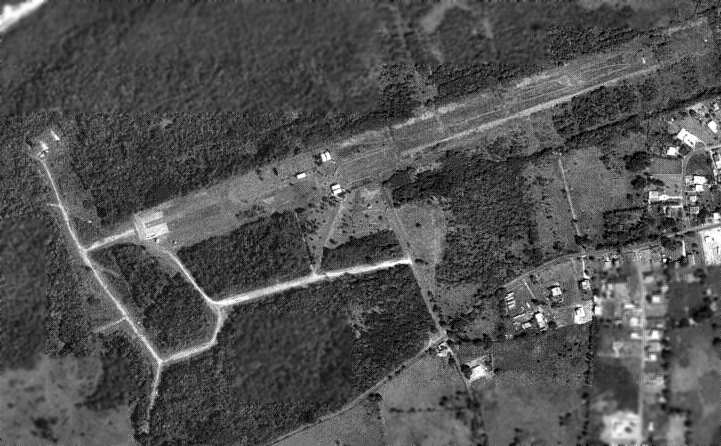
As seen in the 1995 USGS aerial photo, the airfield consisted of a single 4,000′ long paved runway, and a network of taxiways extending from the west end of the runway.
Several buildings had been placed over the runway’s middle section.
Vega Baja was depicted on the 1998 World Aeronautical Chart as an abandoned airfield.

A 2000 photo by Ricardo Medina of model airplanes on the runway at Vega Baja.

An October 30, 2004 USGS aerial view looking northeast at the site of the Vega Baja airfield, showing the model aircraft runway which has been overlaid on the west end of the former runway.
Ricardo Medina reported in 2005, “The airfield is still used as a airfield but ironically used by a model airplane association group that fly remote controlled aircrafts on weekends. In recent years, the airstrip was used on several occasions as drop-off place for drugs by cartel members, forcing the authorities to divide the airstrip in half by means of a cyclone fence to prevent its further use. Very few structures remain of that era, and the surrounding vicinity is being rapidly developed with residences.”

A 2012 photo by Paul Betancourt of Vega Baja, “Looking northwest to the end of the strip. It appears from some of the exposed areas that the original runway surface was mix of tar & crushed local rock & coral, like the ones the 20th Air Force would construct.”
Paul Betancourt reported in 2012 of the Vega Baja airfield, “I gained access from the Parks & Recreation Department for a tour of the easiest end of the field. The model airplane club has since been banned from the area for being problem residents.
As we saw & the superintendent pointed out, they weren’t treading lightly: there’s a whole lot of trash by the fence and I found stuff like broken tools. Particularly along the western access roads & the east half of the strip, it’s beginning to be reclaimed and looks similar to the strips on Bougainville, etc.
I did spend a good amount of time trying to find anything that the 22nd & 23rd Fighter Squadrons may have left behind with no results other than a sunburn. The end of the strip is beginning to be retaken by flamboyan trees, and the auxiliary roads to the main gate, radio tower, and launch site are turning to gravel. The taxi strip has become the park’s parking lot, and the one remaining structure is being maintained. The east end maintains the outline, but is almost completely overtaken by grass. The Parks & Recreation guy said that they want to commemorate the field somehow, but the east end will likely become a small wind farm.”

A 2012 photo by Paul Betancourt of Vega Baja, of “the one surviving structure, near where the entrance road meets the taxiway.”
Hoy es Día del Veterano en Vega Baja
 Para los vegabajeños, ser veteranos tiene una significación mayor, por cuanto en nuestro barrio de Algarrobo existió uno de los campamentos de entrenamientos del servicio militar más importantes de la nación durante la Segunda Guerra Mundial y en la posguerra.
El Camp Tortuguero conservó el nombre pese a que tenía un nombre en español. Casi siempre dedicaban los lugares militares a personas destacadas dentro de la organización. El de Tortuguero no viene de las tortugas sino del árbol de tortugo amarillo que predominaba en el área y que ya casi está extinto. Su madera era excelente para hacer muebles y con ello se hicieron los durmientes del tren en nuestra área. Estos constituyen las piezas de madera entre los rieles.
Hoy en la mañana, en el mismo lugar donde hubo el Campamento, habrá una actividad auspiciada por el Gobierno Municipal de Vega Baja y su alcalde Marcos Cruz Molina.
Historia de la Legislatura Municipal de Vega Baja| 9 de enero de 1911
 Por Thomas Jimmy Rosario Martínez
Historia
La Legislatura Municipal de Vega Baja hace más de cien años y por la centuria anterior se llamó Concejo Municipal. La palabra se escribe con c y no como el sinónimo consejo de orientar, porque así está escrito en los documentos de la creación de esta institución.
La Legislatura Municipal es, teóricamente, la presencia del pueblo en su aspecto más representativo. Antes había un rey con poderes absolutos, pero ese poder se fue diluyendo, primero, con los representantes que el mismo rey escogía y luego con los que los habitantes elegibles seleccionaban. Anteriormente les he escrito sobre la primera eleción en 1812. En esta ocasión vamos a recordar una sesión inaugural aproximadamente cien años después de ese evento, pero en realidad hace un siglo, ya que desde que nuestra Legislatura Municipal comenzó ya hace doscientos años.
El 9 de enero de 1911 se reunió el alcalde con el Concejo Municipal de Vega Baja. Para entonces fungía como alcalde José Pérez Cruz, quien
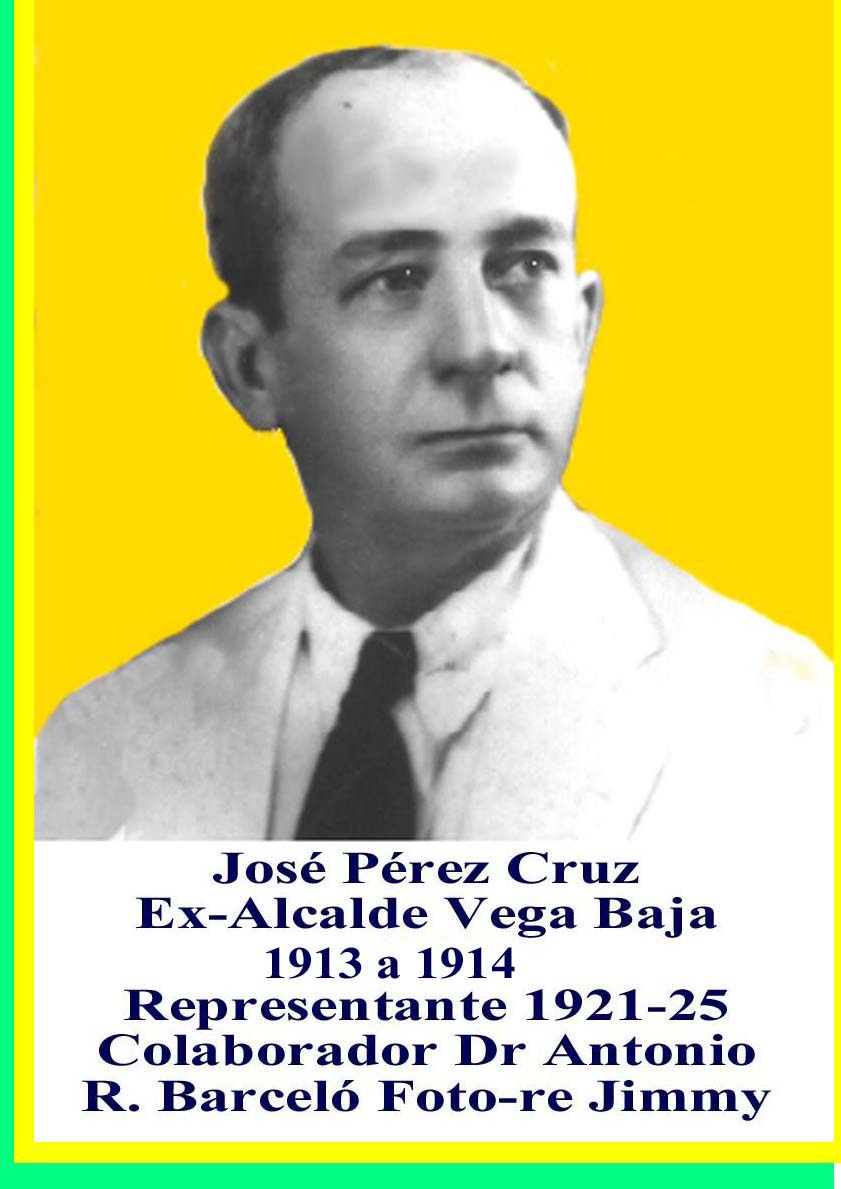
Alcalde de Vega Baja
anteriormente había sido Concejal y que después de alcalde, fue representante a la cámara. Aunque actualmente no tenemos muchos datos de su vida personal, sabemos que al menos tuvo una vida política que aparentemente comenzó en el Concejo y que luego lo proyectó hasta la política estatal.
La sesión se constituyó con su vicepresidente, Cecilio Martínez Jiménez, José Cano Delgado, Carlos García Costa, Tomás Landrón Rodríguez, Ramón Torres Román y como Secretario, Fernando Enríquez Carmona. Generalmente los miembros del Concejo eran comerciantes o industriales reconocidos en la comunidad y que ganaban acceso al poder por su presencia.
El Secretario Fernando Enríquez Carmona casó con Brígida Alvarez Rodríguez, hija del dueño de la primera imprenta de Vega Baja y editor de varias publicaciones, de la cual también el también formó parte. Enrique Carmona murió siendo Secretario de la Cámara de Representantes. Es el tío de Agustín Alvarez, abuelo de la historiadora Sandra Enríquez Seiders, del compositor Roberto Sierra Enríquez y bisabuelo de Marquito, el violinista y director de Marquito y sus violines, quien nos deleitó en mayo de este año en la Plaza de Recreo.
Para 1911 al Concejo también se le llamaba «Corporación», no en el sentido privado como hoy día lo podemos percibir, sino en que se incorporaban los poderes ejecutivos -el alcalde era el Presidente- y los legisladores, que eran los concejales. Esto se suprimió parcialmente cuando la asamblea municipal elegía a su presidente y en 1977 se suprimió totalmente cuando en el gobierno compartido con un alcalde 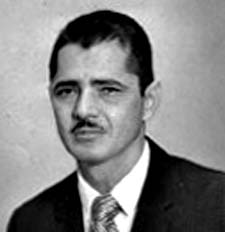 popular -Luis Meléndez Cano- y una Asamblea Municipal -penepeísta, presidida por Agapito Rosario Rosario, nombraron a Edwin Martínez Rolón como primer Secretario de la Asamblea Municipal en propiedad, independiente del Secretario Municipal, que hasta entonces ejercía las dos funciones. Bajo la incumbencia de Luis Meléndez Cano, se regresó por unos años a la función dual con el Secretario Municipal Luis A. Ramírez, pero luego se revirtió a la lógica de total separación de dos ramas separadas.
En un discurso breve del Alcalde José Pérez Cruz, este expresó, entre otras palabras, lo siguiente: » Yo espero, que entre el Poder Legislativo y el Ejecutivo, que yo represento, exista siempre la mayor harmonía y la más franca cordialidad, levantando por encima de todo y por todo, la bandera augusta del patriotismo, para que a todos nos quede la satisfacción del deber cumplido».
En aquella sesión el alcalde pidió que se confirmaran sus nombramientos ejecutivos. También, se atendió una solicitud de pago de un contratista de nombre Luis Garófalo, quien había realizado unas obras en la Plaza de Recreo, lo que se pospone «por haber otros compromisos». Se informó además que la Puerto Rican-American Tobacco Co. interesaba establecer una sucursal en nuestro pueblo. En Concejo en general le ofreció ayuda, pero el concejal Tomás Landrón Rodríguez, le ofreció una cuerda de terreno. Tal era el compromiso de los concejales.
En aquella ocasión, el Servicio de Correos de Puerto Rico notificó el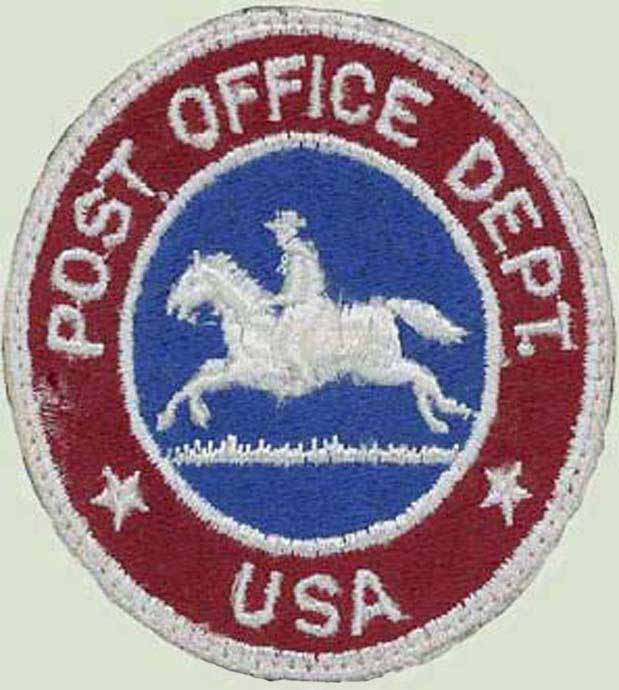 establecimiento de un doble servicio para la correspondencia de Vega Baja. Eso significaba que se recogería dos veces al día. Hoy día on tres recogidos diarios.
Otro problema que atendió el Concejo fue el de la «alcantarilla enclavada en el kilómetro 47». Esto se refería a la inundación provocada por el río y las aguas pluviales que se producía en la región noreste de la población. Los terrenos afectados pertenecían a la señora Inés Navedo viuda de Náter. La alcantarilla de referencia era la tercera entre el trayecto de la Estación del Tren de Vega Baja a la Central San Vicente, cuya medida era menor de lo que debía tener, lo que impedía el flujo de las corrientes.
Hay una petición que se le hace al Concejo para reparar el camino de Ceiba hacia la Central San Vicente, la cual se podría hacer con la ayuda del peticionario, de nombre E. L. Moore y los mismos vecinos.
Se aprobó una ordenanza prohibiendo la instalación de depósitos de materiales inflamables dentro de la zona urbana. No se podría fabricar ladrillos, hornos de pan, de cal, para carbón, ladrillos ni otros materiales dentro del recinto de la población. Tampoco se quemaría basuras ni todo aquello que por el humo pudiera molestar al vecindario, dentro del radio del pueblo a no menos de 500 metros de la zona urbana y si fuere, a la parte oeste de la población. Posterior a esto sabemos que hubo varias panaderías dentro del pueblo. Una de ellas aun conserva su horno en el Edificio Suárez-Sandín de la Calle Baldorioty. Otras estuvieron en las calles Blanco Sosa, Muñoz Rivera Interior y Betances. También hubo una fabrica de ladrillos a la salida del pueblo, donde hoy día está el Cuartel de la Policía, lo que estaría cubierta bajo esta Ordenanza.
Es posible que esta Ordenanza fuera consecuencia de algún incendio anterior en el área comercial del pueblo. Para este tiempo, la mayor parte de las casas en la zona urbana eran de madera con techos de zinc, contrario a actualmente, que predomina el concreto.
Resultados de la elección PNP de Arecibo
 (Proporcionada por Angel Abdiel Rodriguez Nazario)
Vega Baja TRS – 43, Abel – 40, Anibal -12
Dorado TRS -32, Aniba-l 23, Abel- 17
Vega Alta TRS, Anibal- 22, Abel- 16
Morovis TRS- 40 Anibal- 19, Abel- 18
Manatí TRS- 65, Anibal- 43, Abel- 13
Dorado TRS -32, Aniba-l 23, Abel- 17
Vega Alta TRS, Anibal- 22, Abel- 16
Morovis TRS- 40 Anibal- 19, Abel- 18
Manatí TRS- 65, Anibal- 43, Abel- 13
Diario de Puerto Rico| Grave ciclista vegabajeño atropellado en Dorado
DORADO – Un accidente grave con un ciclista se reportó a eso de las 6:40 de la tarde del sábado en la carretera PR-2 en Dorado, informó la Policía. Según el parte policiaco, Vicente Ortiz Burgos de 46 años y residente del barrio Río Lajas, del mencionado municipio, manejaba un Suzuki Aerio, color oro del 2005 por el carril derecho de la mencionada vía, cuando impactó al ciclista Erick Jiménez Tirado de 35 años y residente de Vega Baja, quien viajaba por el área del paseo.
Jiménez Tirado fue trasportado al Centro Médico de Río Piedras donde fue diagnosticado con traumas en diferentes partes del cuerpo.
A Ortiz Burgo se le realizó la prueba de aliento, arrojando punto 30 por ciento de alcohol en su organismo.
El agente José Camacho de la División de Patrullas de Carreteras de Bayamón, en unión al fiscal Carlos Rodríguez estuvieron a cargo la investigación.
 Archivo del Diario Vegabajeño de Puerto Rico Segunda Etapa de Diciembre 2012 a Octubre 2016
Debe estar conectado para enviar un comentario.